A long-term rental keeps the same container on your property across a project that runs weeks instead of days. A whole-house remodel in Tollgate Crossing or a phased deck-and-roof job near Southlands rarely fits a…
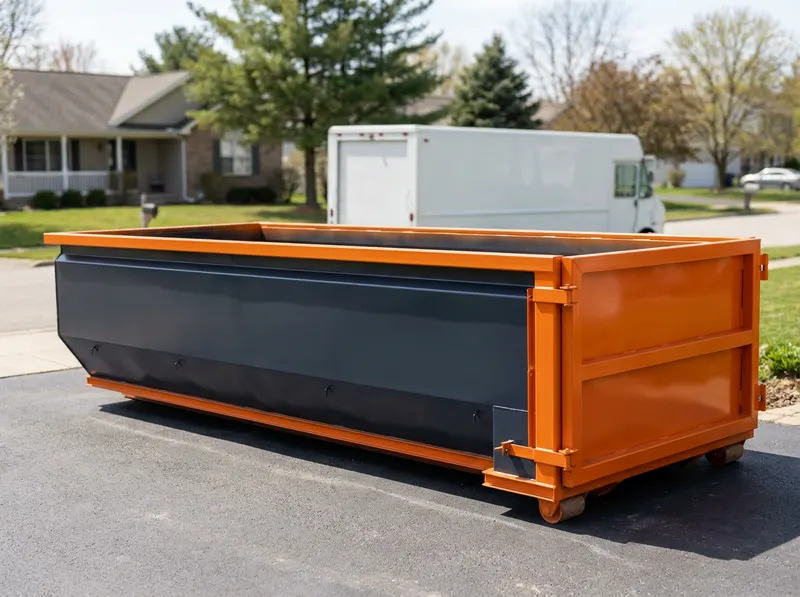
A long-term rental keeps the same container on your property across a project that runs weeks instead of days. A whole-house remodel in Tollgate Crossing or a phased deck-and-roof job near Southlands rarely fits a short window, so the bin stays put and a swap-out resets capacity whenever it fills. Step 1, the first dumpster is delivered to the driveway or a street-approved spot. Step 2, you load it over days or weeks at your own pace. Step 3, you call when it is full. Step 4, the loaded container is hauled to a transfer station and an empty one is set in the same footprint. Step 5, the cycle repeats until the project is done. Each swap is billed as a fresh flat rate for that size, a 20-yard swap is $695 again, not a surcharge on the first rental.
Matching the container to the work keeps swap frequency low. A 10-yard holds roughly 4 pickup-truck loads and suits a single-room gut in Mission Viejo; a 20-yard holds about 8 loads for a kitchen-and-bath remodel; a 30-yard and 40-yard carry bulky framing, siding, and roof tear-off debris on larger Murphy Creek builds. The trade-off is simple: a bigger bin means fewer swaps and less downtime, while a smaller bin fits a tight Seven Hills driveway and lower weight. Heavy, dense debris, concrete, dirt, roofing shingles, brick, settles fast, so a 10-yard or 15-yard is the right call for dense loads even on long jobs, because volume limits matter less than weight. The EPA tracks construction and demolition debris as the largest single waste stream in the country, which is why phased remodels generate far more than one bin can hold.
A dumpster rental is not junk removal, the container is set, you load it, and the full bin is hauled off; our team does not carry items out of the house. For long-term rentals on a public street rather than private property, the City of Aurora may require a right-of-way or obstruction permit; the Aurora permit office handles those, and a bin kept in your own driveway in Highland Hills or Sable Ridge needs none. Weight limits still apply per size, and separating out household hazardous waste is required, paint, solvents, batteries, and electronics cannot ride in the dumpster. Arapahoe County residents can route those items through local recycling and hazardous-waste drop-offs, and the Colorado Department of Public Health and Environment lists what counts as regulated waste.
Contractors running crews near the Anschutz Medical Campus or job sites off E-470 keep a long-term bin to stay compliant with OSHA debris-disposal rules on an active site, where loose waste is both a hazard and a citation. For jobs that generate recoverable material, construction and demolition recycling guidance and the waste industry's own reporting note that sorted roofing, metal, and clean wood divert the most weight. Concrete and masonry can often be crushed and reused rather than landfilled; the concrete industry’s recycling notes cover that stream. Keeping the bin on site through a full project, rather than renting and returning repeatedly, cuts delivery trips and keeps the work moving.
Every job gets a firm, written price after an on-site visit.
Tell us about your dumpster swap-outs & long-term rentals job in Aurora and we'll send a clear, written quote, usually the same day.
 Maverick Dumpster Rental